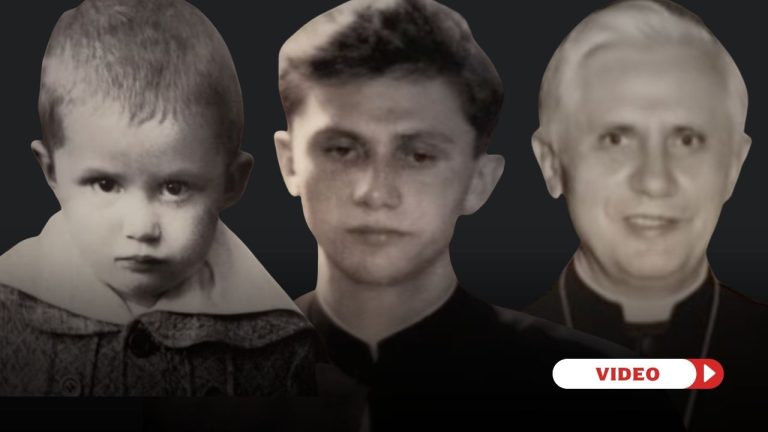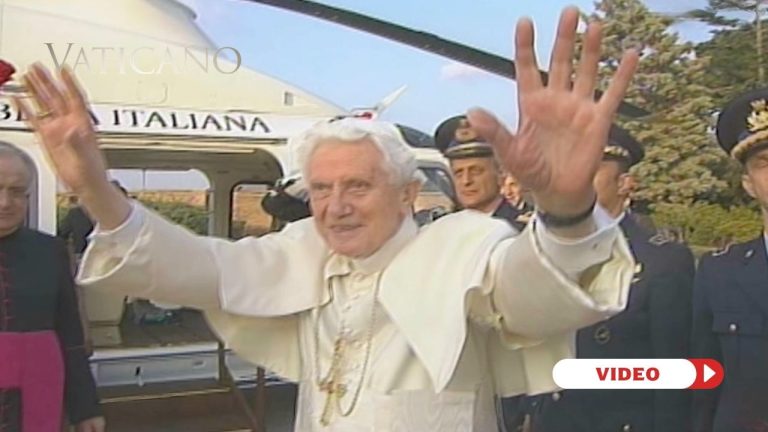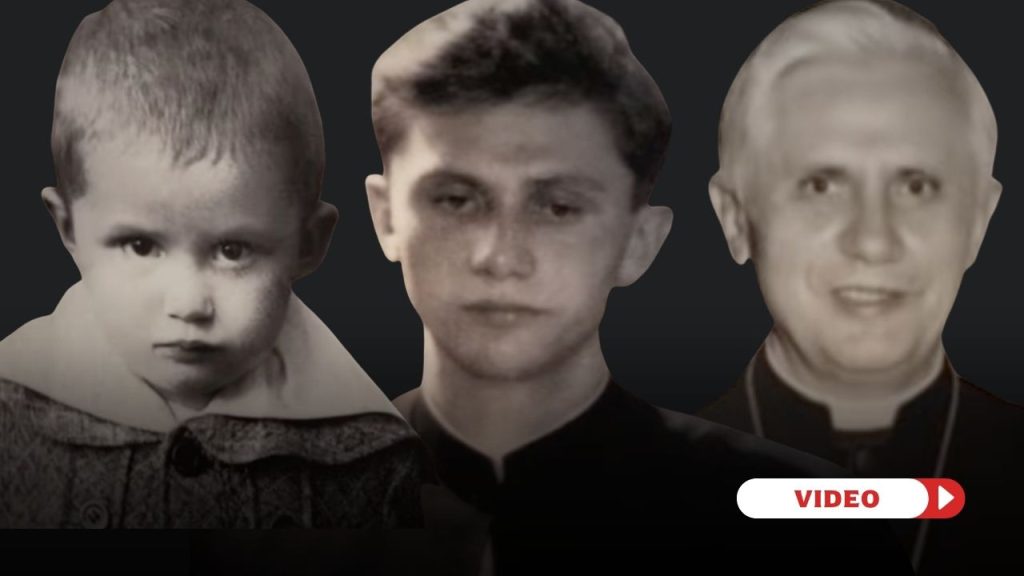
As the Church looks ahead to the centenary of Pope Benedict XVI’s birth in April 2027, celebrations are already underway to honor the life and legacy of Joseph Ratzinger—one of the most influential theologians of the modern era.
In the Italian city of Pordenone, the “Associazione Eventi di Pordenone,” in collaboration with the Vatican’s Ratzinger Foundation, has launched the commemorations with a special exhibition titled “Remembering Benedict XVI: Towards the Centenary of His Birth.”
Centenary of Pope Benedict’s Passing
The exhibition offers not only a historical overview, but a deeply personal look at the man behind the papacy.
An Intimate Portrait of the Pope
Rather than focusing solely on Benedict XVI as a global figure, the exhibition invites visitors into his private world—through personal belongings, photographs, vestments, and everyday objects.
Co-curator Michele Filippi explained the intention behind the project, noting that it aims to open the centenary celebrations across Europe. He said, “We wanted to host this exhibition, which prepares us for the great celebrations and major events that will take place across Europe in honor of Benedict XVI.”
But more than that, the exhibition seeks to reveal a side of Benedict many never saw. Filippi described it as “an exhibition that tells the story of the private Benedict XVI, the one we perhaps never saw or knew… objects that belonged to him personally.”
Through these items—carried with him from his time as a cardinal to his years in the papal apartments and finally to Mater Ecclesiae—visitors are offered what Filippi called “a more personal, more intimate image of Benedict XVI… like stepping into his rooms.”
Fr. Roberto Tondaro, Vicar General of the Diocese of Pordenone, emphasized how this closeness can transform perception. He said the exhibition provides “an opportunity for visitors to draw closer to the figure of this pontiff… and to become, in a way, more intimately acquainted with him.”
By encountering the objects of his daily life, he added, visitors begin to see “his sensitivity, his attentiveness, and his passions.”
Faith, Thought, and Personal Devotion
Among the most striking elements of the exhibition are the items that reflect Benedict XVI’s spiritual life and theological vision.
Curator Luca Caruso pointed to deeply personal objects, including statues of saints who shaped Ratzinger’s life. He explained, “Perhaps the most intimate objects are the statues of Saint Joseph… and also a Saint Augustine, who was something of a lifelong companion.”
Saint Augustine, in particular, played a defining role in Ratzinger’s intellectual journey. Caruso noted how even Benedict’s coat of arms reflected this influence, referring to the shell symbol tied to the famous Augustinian story. This symbol, he explained, points to “the impossibility of containing the infinite of God within the human mind.”
In this way, the exhibition highlights the core of Benedict’s mission as a theologian and pastor: “to make known… the greatness of the evangelical message.”
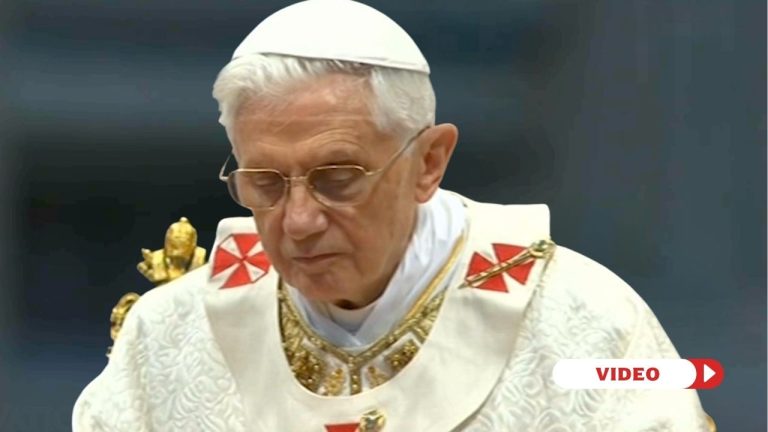
Visitors are also drawn to more visible elements of his papacy—his vestments and distinctive style. Caruso described how “the vestments, the papal garments” often leave a strong impression, including “a beautiful white cassock with the red mozzetta… those distinctive red shoes… a mitre, liturgical vestments.”
To complete the portrait, the exhibition recreates a study space—“a desk with a crucifix, books, and a signed volume”—offering a glimpse into the daily rhythm of a man shaped by prayer, study, and reflection.
A Local Connection with Global Meaning
The choice of Pordenone as the starting point for the centenary celebrations is not случай. The region holds a unique connection to Benedict XVI.
Sandro Sandrin, president of the Associazione Eventi and creator of the exhibition, explained that the city lies between Aquileia and Venice—two places visited by the pope. He said the exhibition is also meant “to pay tribute to a Pope who did so much good for our society.”
That connection is captured in a small but meaningful detail preserved in the exhibition: a handwritten note from Benedict himself.
Fr. Tondaro recounted how a Christmas tree donated by the region to the Vatican eventually reached the Pope Emeritus at Mater Ecclesiae. Along with it came a note from the local bishop—and, unexpectedly, a reply. He said, “to everyone’s surprise… the Pope Emeritus replied with a handwritten note of his own, which we have here in the exhibition.”
A Legacy That Continues
More than a retrospective, the exhibition marks the beginning of a broader journey leading to 2027. It sets the tone for future events across Europe that will continue to explore and celebrate Benedict XVI’s legacy.
Sandrin expressed this hope clearly, saying, “The hope is that we have set a journey in motion.” He added that each future initiative will be “an opportunity to embrace this legacy… through a message that comes from Pordenone.”
Through this first exhibition, the life of Joseph Ratzinger is not only remembered—it is rediscovered, in all its depth, simplicity, and enduring relevance for the Church today.
Adapted by Jacob Stein.
Source: https://ewtnvatican.com/articles/remembering-benedict-xvi-a-centenary-begins