“…During his apostolic journeys, the Pope appears to everyone as a messenger of peace: his travels are what they should always be—bridges of dialogue, encounter, and brotherhood.”
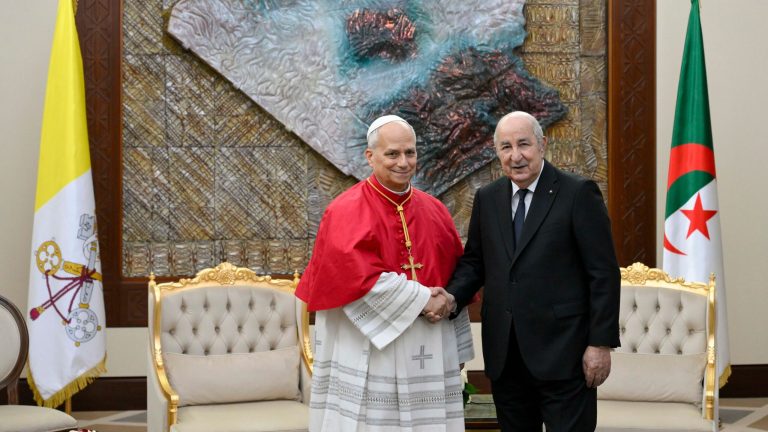
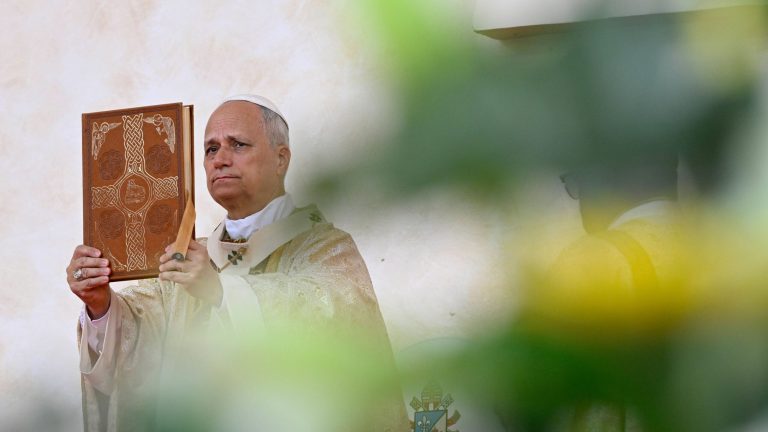
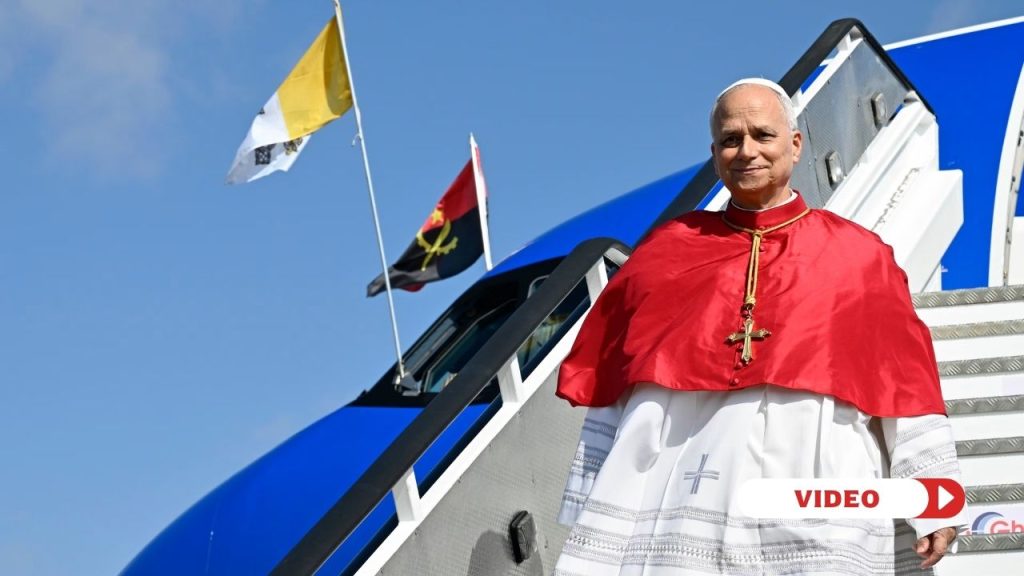
With these words, Pope Leo XIV set the tone for what is quickly becoming a defining feature of his pontificate: a Church that moves, encounters, and embraces. Addressing the delegation of the Italian flag carrier that accompanies him across the globe, the Pope framed his travels not as mere diplomatic visits, but as living signs of unity—bridges spanning cultures, nations, and faiths.
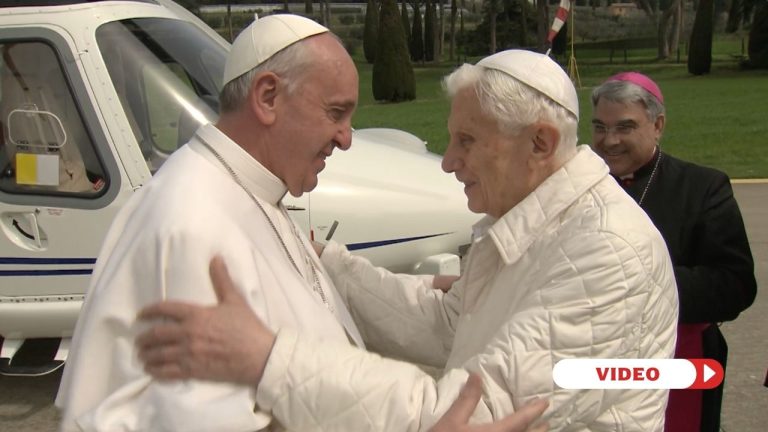
Papal Travels of the Modern Popes
A Pontificate Already in Motion
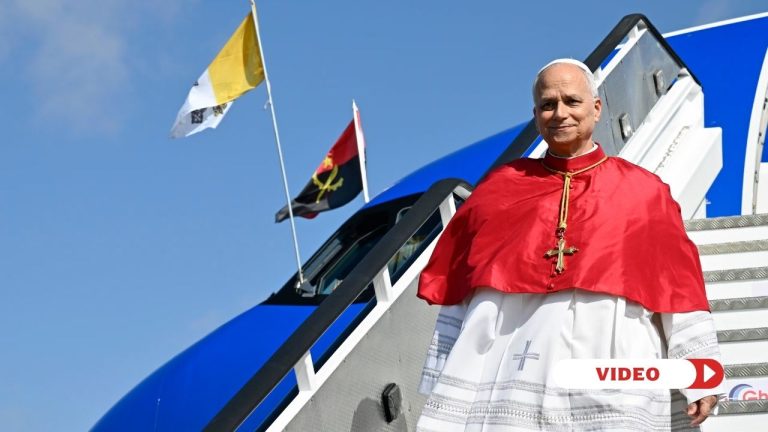
Only months after ascending to the Chair of St. Peter, Pope Leo XIV embarked on his first apostolic journey to Turkey and Lebanon. That early trip signaled continuity with the missionary dynamism of Pope Francis, while also revealing the contours of his own pastoral vision.
His travels are not symbolic gestures from afar. They are incarnational. They bring the Successor of Peter physically into places where the Church is small, fragile, or even nearly invisible.
As Vatican correspondent Andrea Gagliarducci explains, the experience of the papacy is not universal in its immediacy:
“We have a certain perception of the Pope—especially in the Western world—where we always see him, we always know what he says, and we feel close to him in some way. But it’s not like that in Turkey, where Catholics make up only about 1% of the population.”
In regions like Turkey, Algeria, or parts of Africa—where Catholics may represent a fraction of the population—the Pope’s presence becomes something profound: a tangible reminder that they belong to a vast and living universal Church.
The Power of Presence
Since the time of Paul VI, apostolic journeys have evolved into one of the most powerful tools of evangelization. The Pope does not simply speak to the world—he goes out to meet it.
Cardinal Claudio Gugerotti captures the emotional and spiritual impact of these visits:
“People need a spiritual leader. When he comes to see you, they feel that there is hope. And so they come. There are floods of people coming to the streets. You know, there were even Muslims in Lebanon with the Vatican flag and the portrait of the Holy Father… They want to show that the guest is welcome, because you are a man of peace.”
Here, the papacy transcends confessional boundaries. The Pope becomes not only a Catholic figure, but a universal symbol—recognized even by those outside the Church as a bearer of peace.
A Church That Goes Forth
The legacy Pope Leo inherits is immense. Over twelve years, Pope Francis undertook 47 apostolic journeys, visiting 66 countries and traversing vast distances to bring the Gospel to the world’s margins.
These were not ceremonial tours, but “concrete acts of evangelization”—moments in which the Church became visible in places of suffering, hope, and quiet endurance.
Pope Leo XIV steps into this same current, continuing a mission that is at once ancient and urgently contemporary: to make the Church present wherever humanity is found.
The Human Face of Papal Travel
Behind the scale and complexity of papal journeys lies a deeply human dimension—one that often reveals itself in quiet, unscripted moments.
Cardinal George Jacob Koovakad recalls one such encounter during a trip to East Timor:
“In Dili, during a meeting with orphans, we met a boy who was born without arms… After the meeting, I stood close to the Holy Father, and he asked how—thanks to modern technology—the boy could be helped to have arms. That concern… has stayed with me forever.”
This is the heart of apostolic travel: not only addressing nations, but noticing individuals. Not only proclaiming the Gospel, but embodying it in acts of attention and compassion.
The Hidden Labor Behind the Journey
Organizing these journeys is no small feat. Diplomatic protocol, security, logistics, and coordination with governments all converge in a complex orchestration.
As Cardinal Koovakad explains:
“It is a demanding job: it involves protocol with the country’s president, the foreign ministry, security matters, events… But when the Successor of Peter arrives, something changes: one experiences the closeness of faith.”
That “something” cannot be manufactured. It is the intangible reality of communion—the sense that the Church is not an abstraction, but a living body.
Toward the Peripheries—And Beyond
Pope Leo XIV’s travel agenda reflects a deliberate reach toward the margins, both geographical and spiritual.
“Geographical peripheries like Africa, peripheries of faith, but also peripheries that might not seem peripheral, such as Monaco,” Gagliarducci notes, highlighting the surprising breadth of the Pope’s destinations.
Even Monaco, often seen as central rather than peripheral, becomes significant as “the last Catholic stronghold in Europe”—a reminder that the meaning of “periphery” is not always obvious.
Some journeys were long in planning, inherited from Pope Francis—such as Lebanon or a long-anticipated trip to Africa. Others emerge as new initiatives, shaped by the priorities of Pope Leo himself.
Listening as a Form of Healing
If there is a defining characteristic of Pope Leo XIV’s presence, it may well be his attentiveness.
Cardinal Gugerotti observes:
“He’s always ready to listen. He listens a lot. And it is very important because when people who suffer are listened to, there is a kind of… solace which is brought up because you have been listened.”
In a world often marked by noise and division, listening becomes an act of mercy. And in the Pope’s journeys, that listening is not abstract—it is embodied, face-to-face, and deeply personal.
Across continents and cultures, one theme remains constant: wherever he goes, Pope Leo XIV is received as a messenger of peace.
His travels are not simply movements across geography. They are encounters that reveal the Church as what she truly is—a communion that spans nations, a witness that reaches the margins, and a presence that listens before it speaks.
In this way, every apostolic journey becomes more than a visit. It becomes a sign: that the Church is alive, that she is near, and that she walks—step by step—with the world.
Adapted by Jacob Stein
Source: https://ewtnvatican.com/articles/pope-leo-travels-the-world-in-the-footsteps-of-modern-popes